Scrapbook
East Meets West in Design
Representing my Interpretive Experience Design since 1981 is a challenge akin to developing an exhibit itself: a lot gets left on the cutting room floor. So, in going through the work, I found sketches, models, and images that, if nothing else record changing styles, tools, and exhibit techniques.
Also there are the stories, the long hours, hard work and hard play with unforgettable colleagues.
“Senior” designers remember the clack of the teletype, clunk of the fax machine, hand drafting, "type this letter for me please", the smell of a blueprint, Wordstar, Rubylith and Ziptone, one's first laptop (mine a Mac 150), and of course early CAD, database, and spreadsheet programs.
Now it’s “can you hear me?,” “I’ll upload it again," and “if we zhuzh this render, it’ll sell.”
But the process hasn’t really changed. Enjoy these early concept deliverables and results.
1982
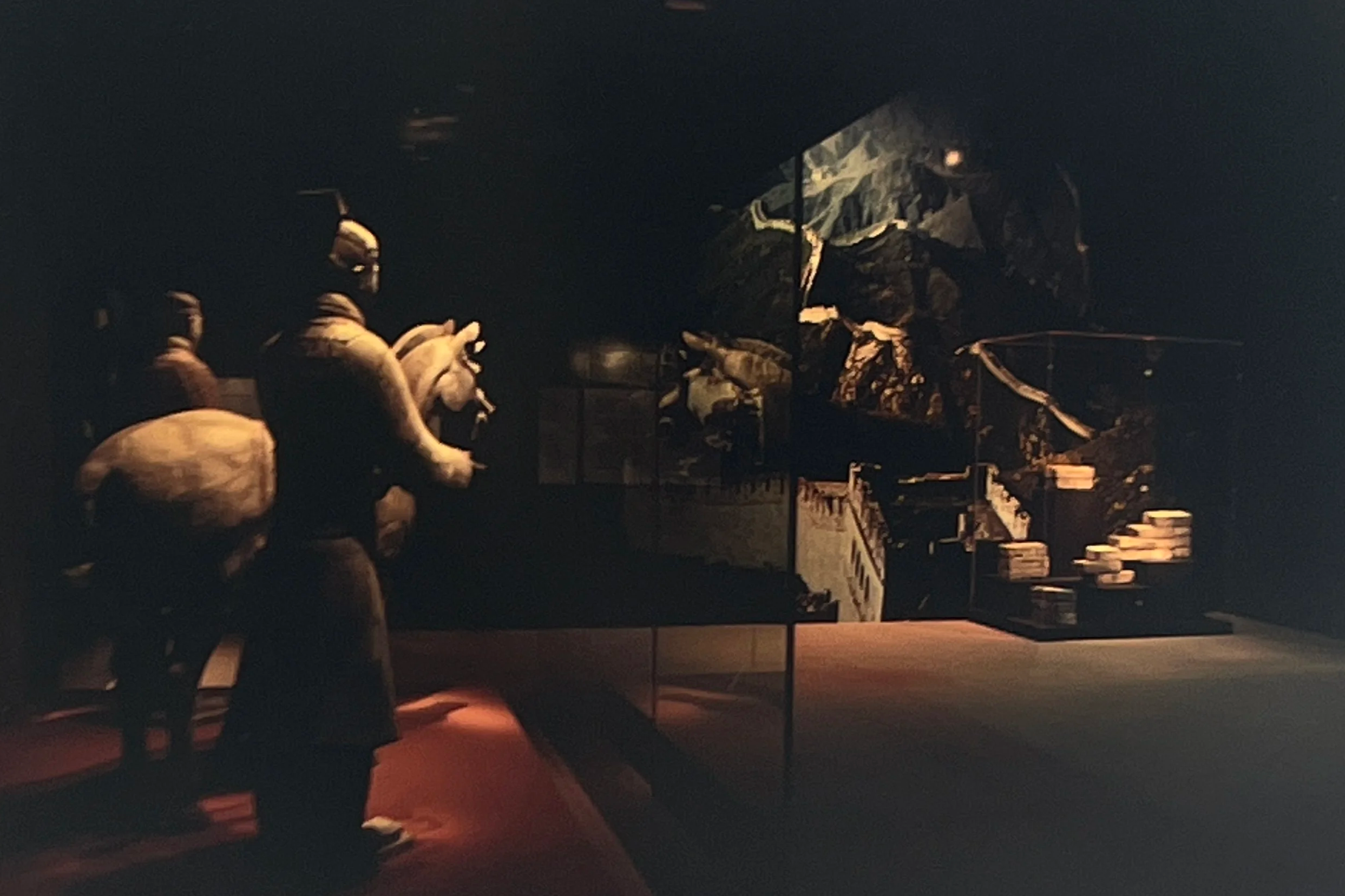
Chinese and Egyptian Pavilions, Knoxville World’s Fair
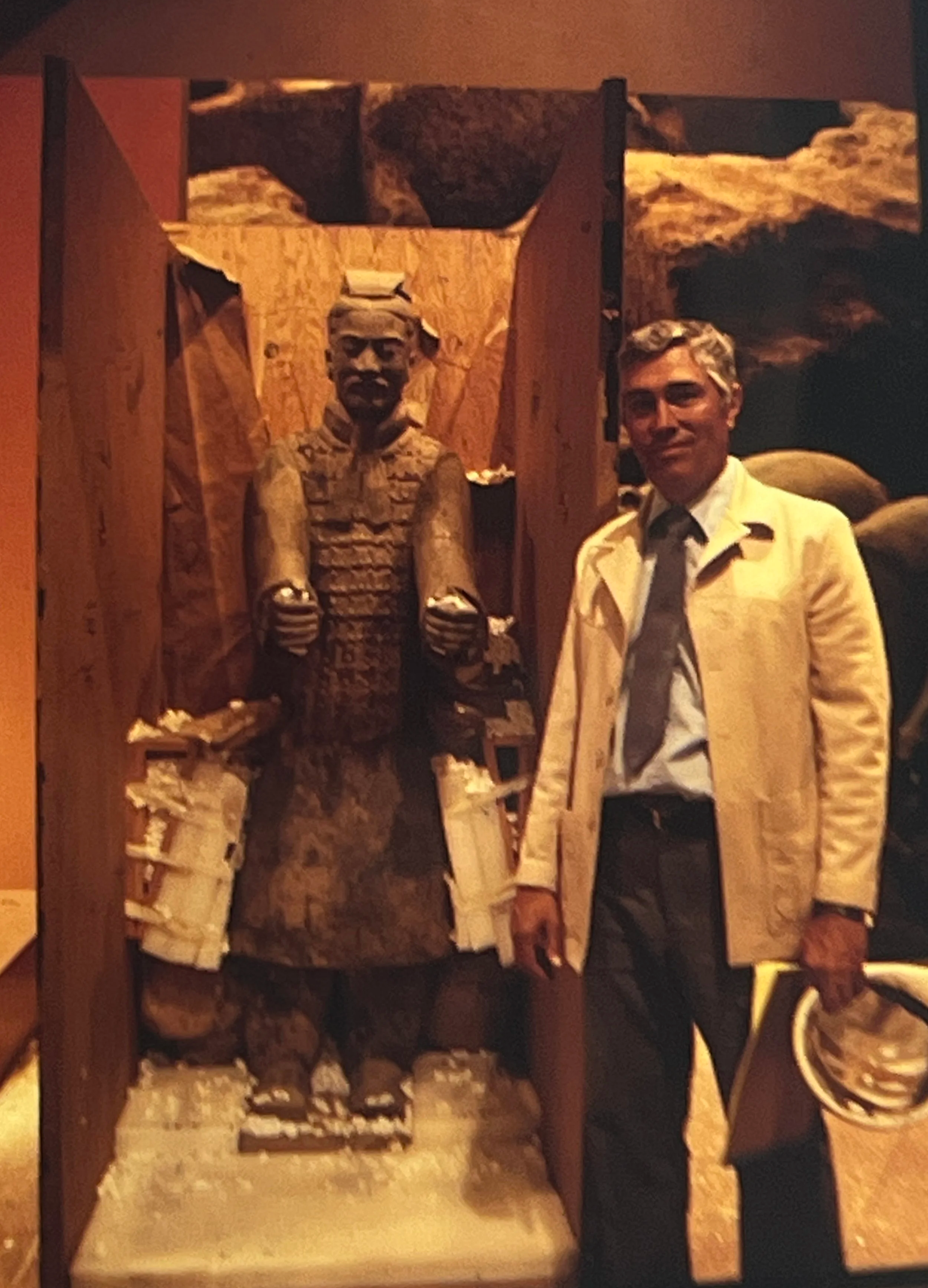
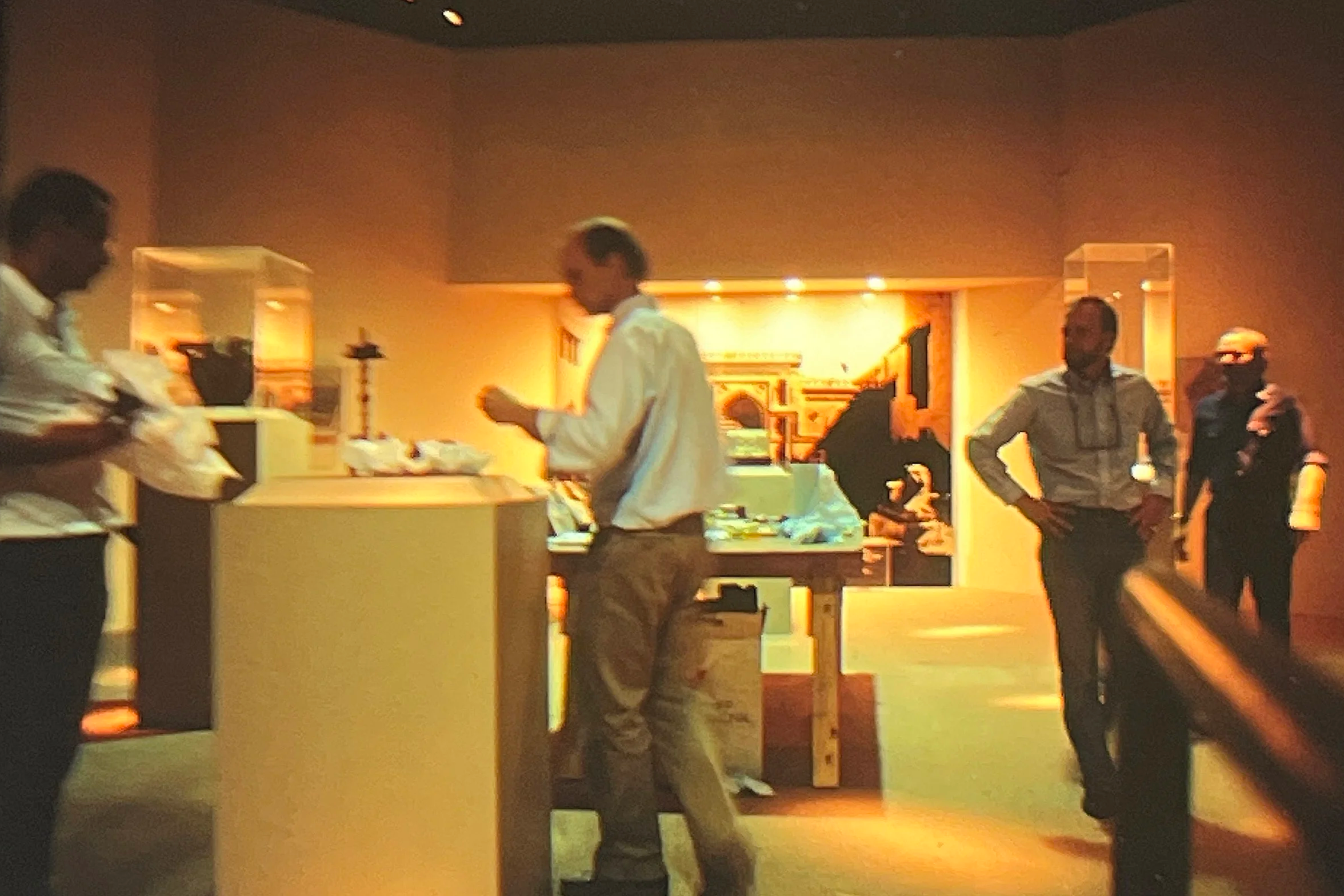
Charles Froome, second from right. Bob Flugelstat(sp?) in the middle, Egypt Pavilion.
In the field for the first time as design coordinator, I was among the first to actually handle the never-before-seen-in-America Xi’an statues.
During installation, while downstairs in the Egyptian pavilion, a gush of warm smelly water suddenly flowed down over me. Turns out that a gigantic Wok in the kitchen of the Chinese Pavilion above had spilled and the pipe chases near the stove did not have spill rims.
1985
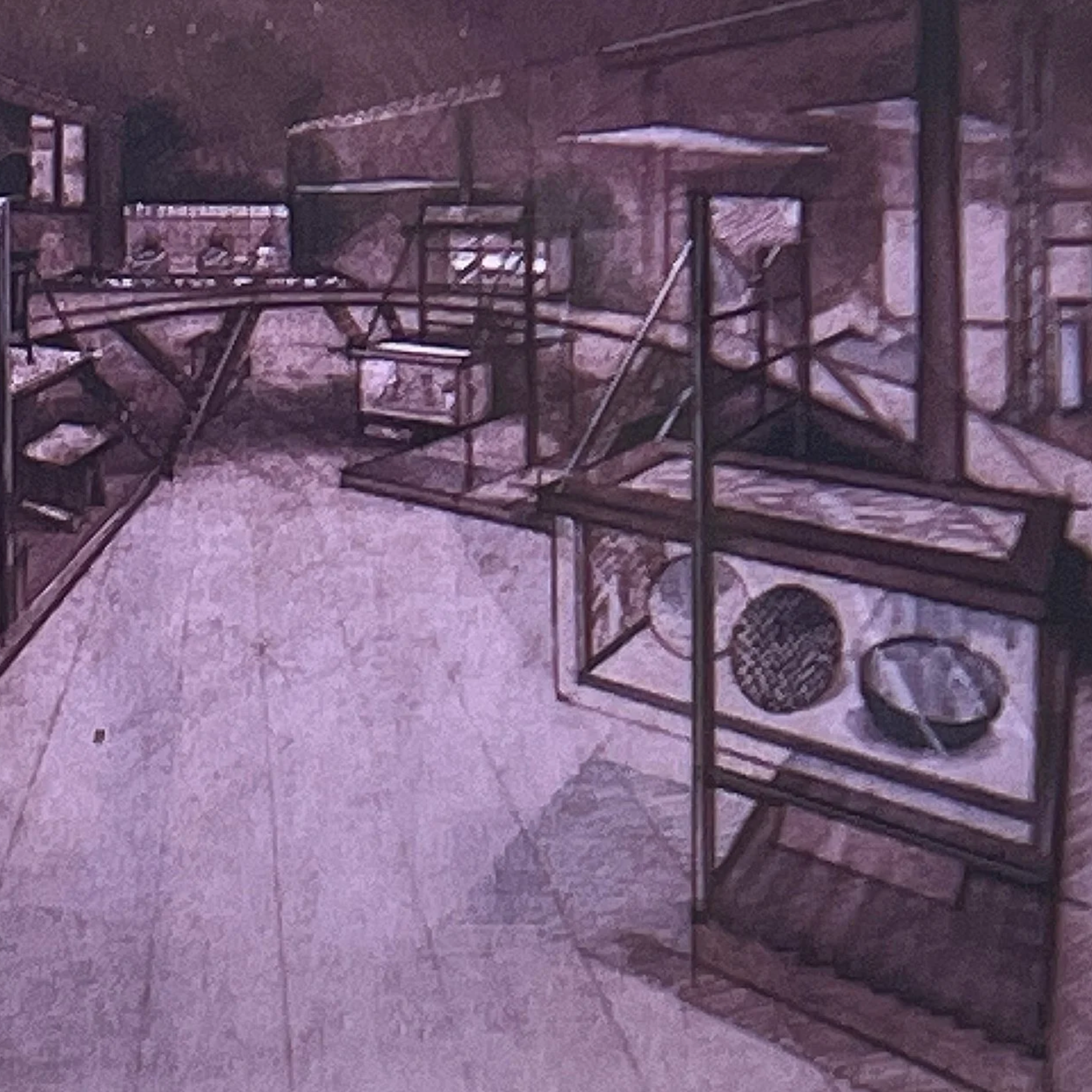
East Meets West in Design, Javits Center
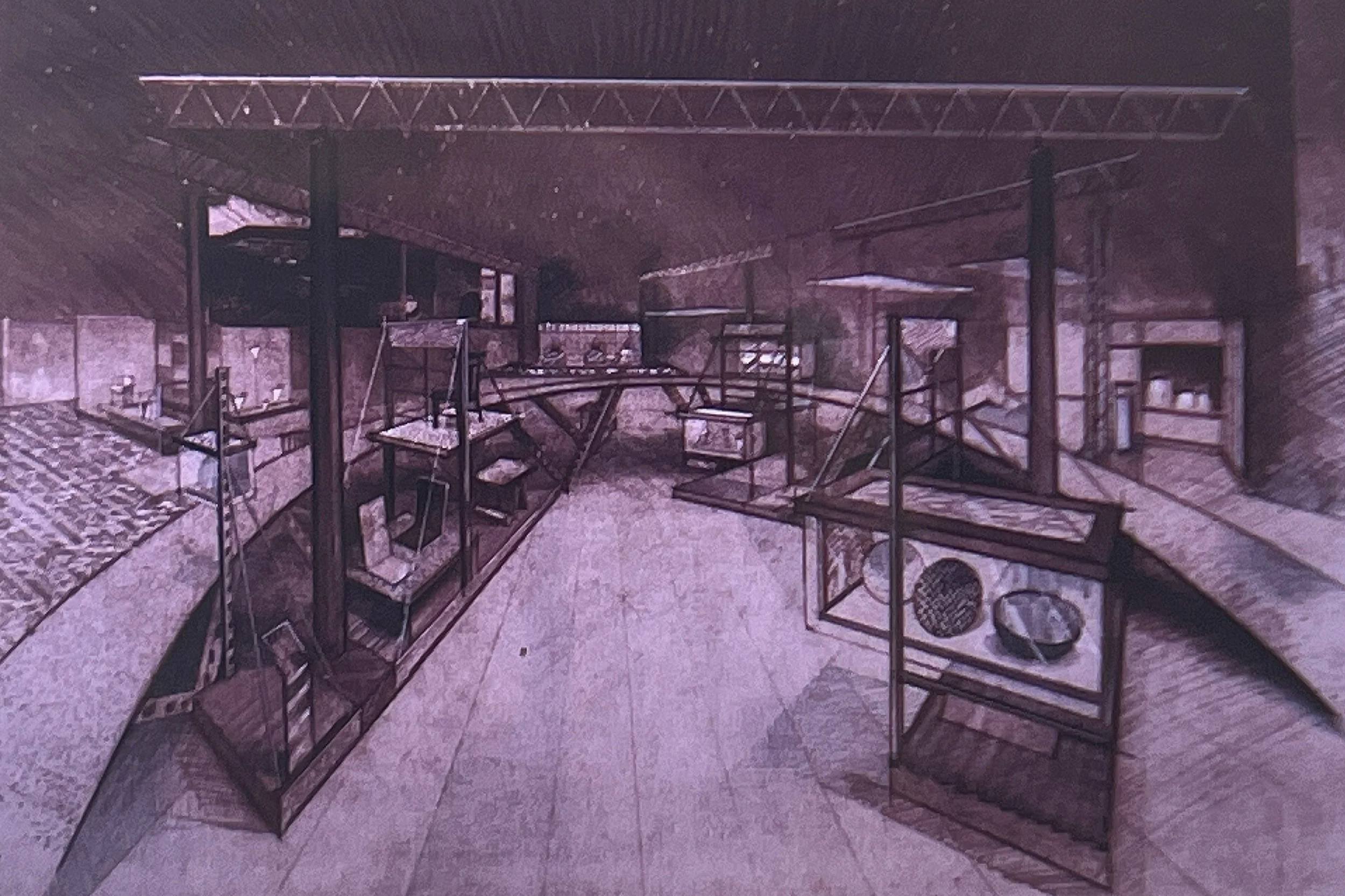
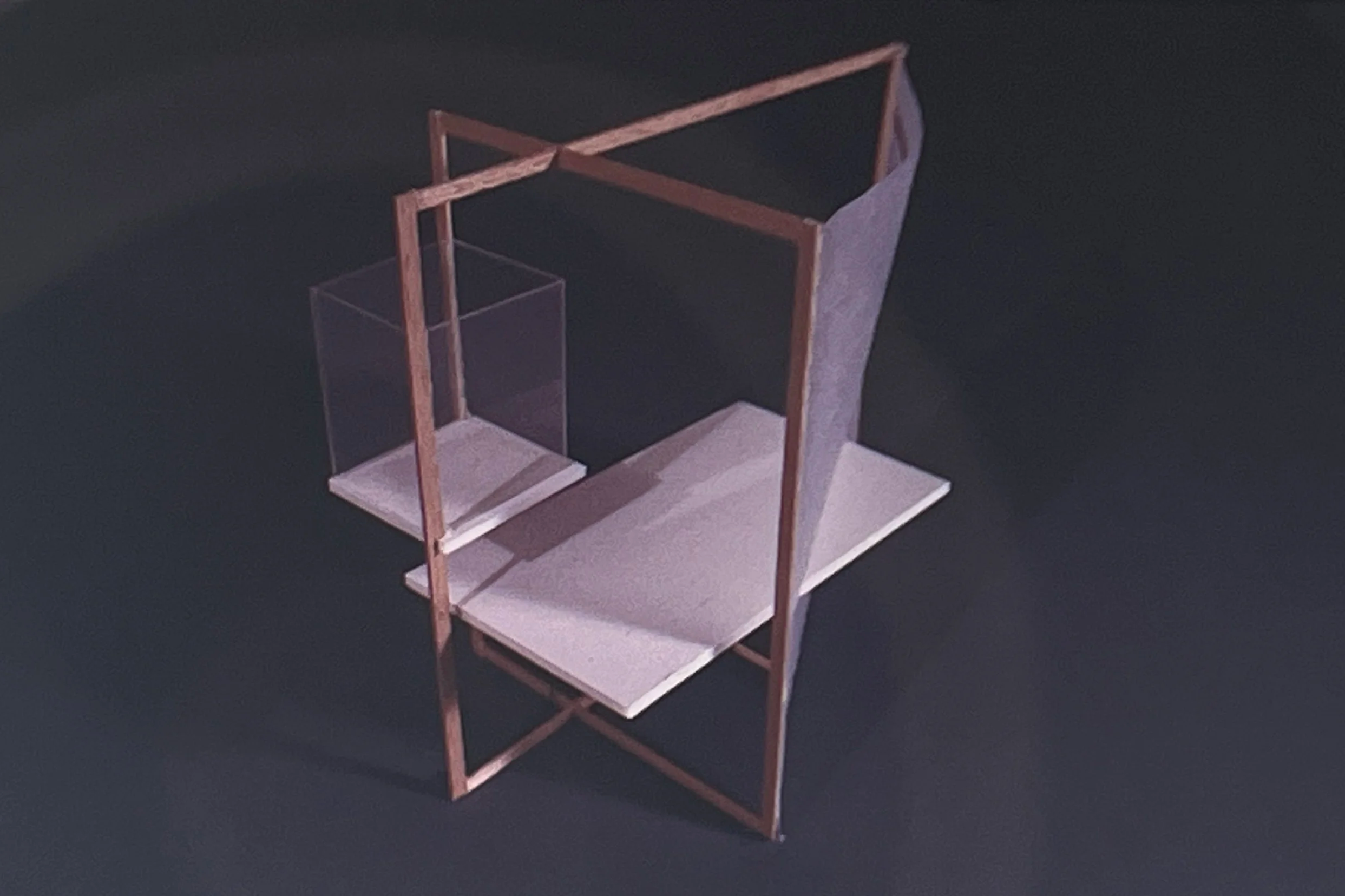
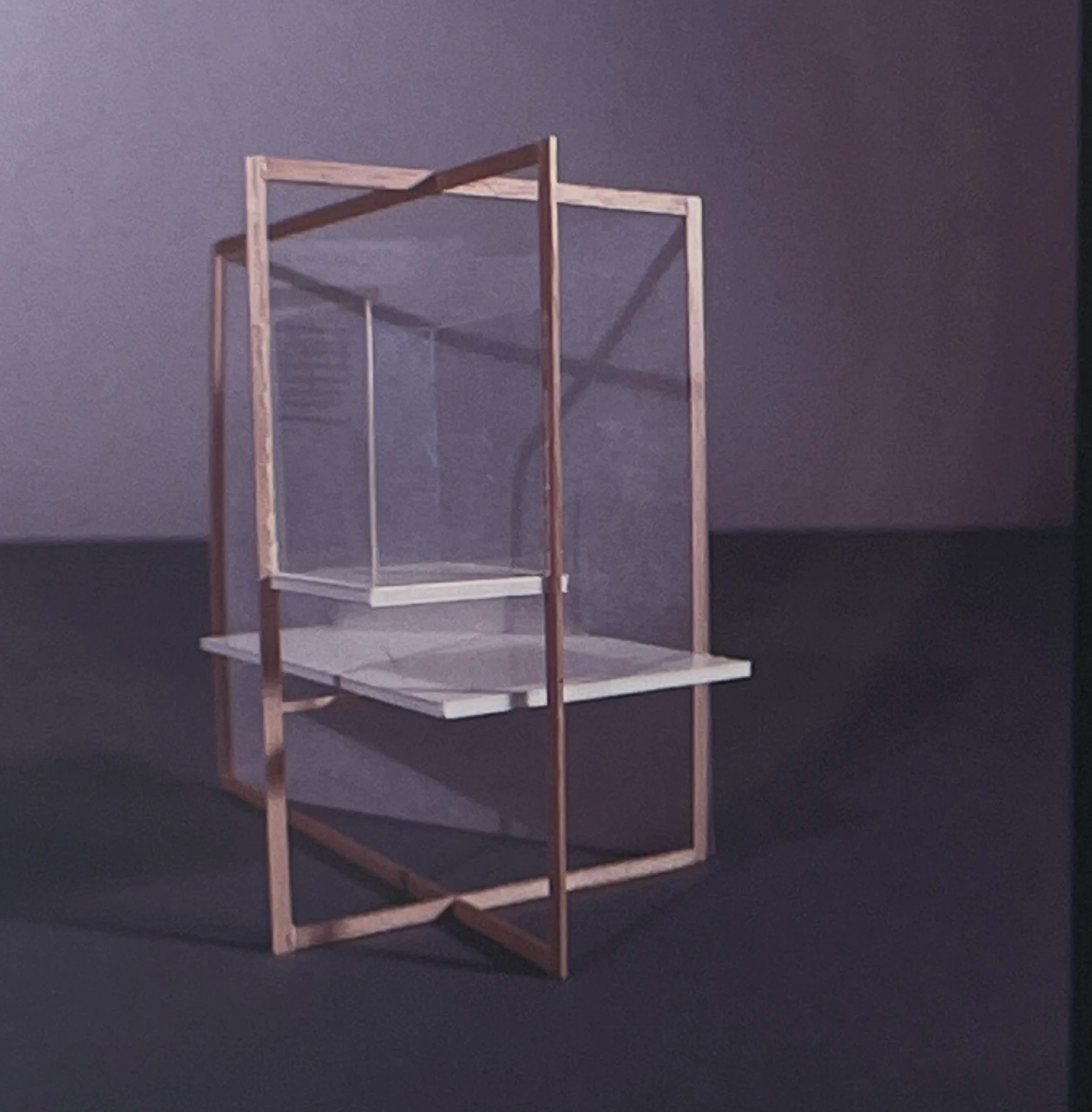
East Meets West was a forward looking organization was founded by Dutch environmentalist and designer Anneke van Waesberghe
The lightweight, stained wood frames supported cantilevered cases and display platforms while a zig zag wall was designed for graphics.
2002
Qatar: Sea Sand Stars
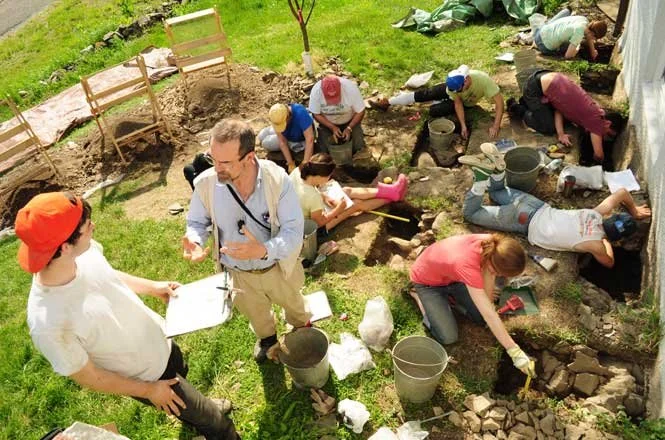
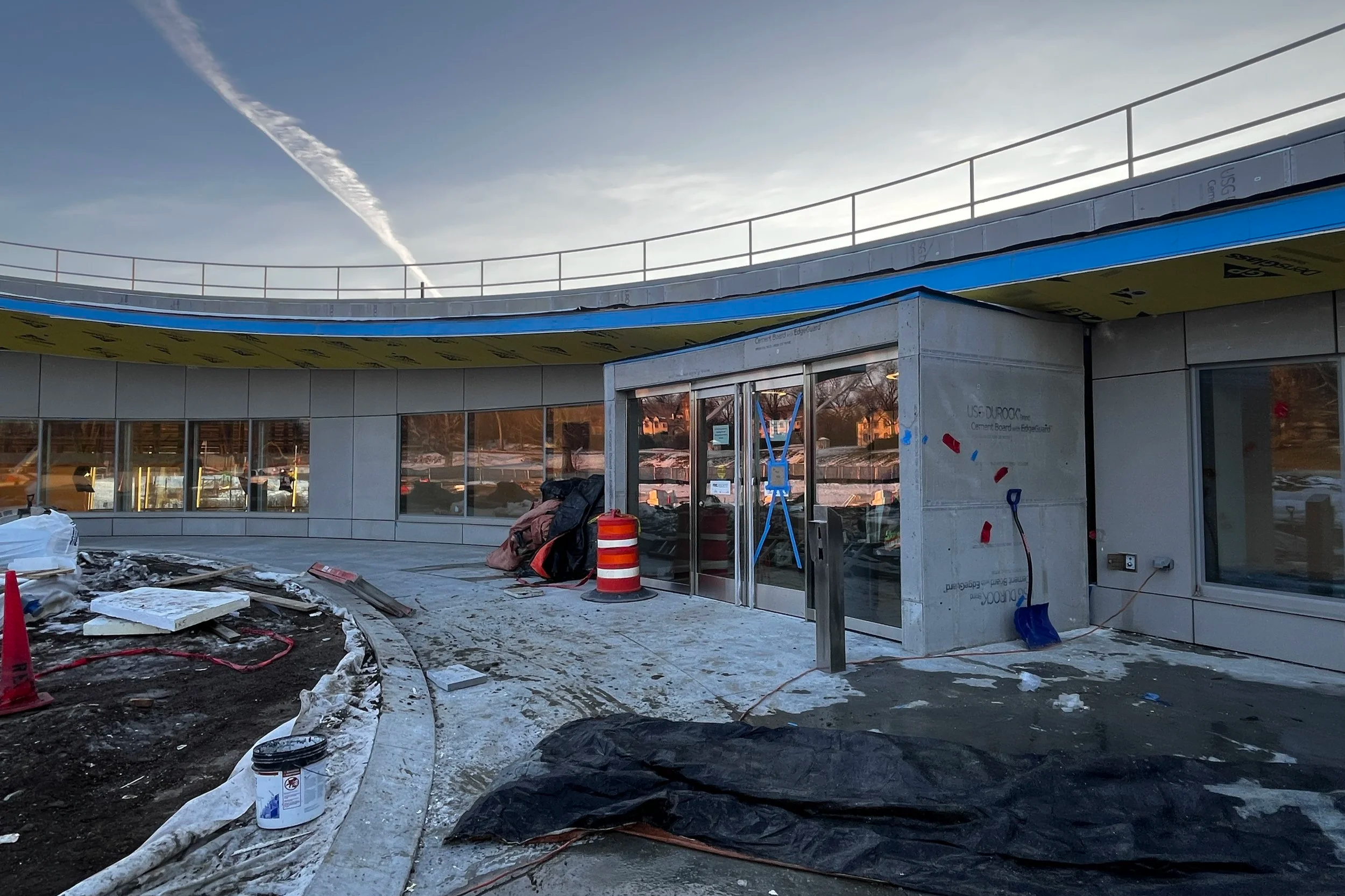
Fisher Center LAB, Bard College, Annandale, NY
Following success in Australia, the team was commissioned to develop a plan for Qatar’s national science museum in Doha. We surveyed regional museums and educational facilities and met with many scientific and cultural leaders.
Guerin conceived an interpretive scheme centered on three Knowledge Universes: Sea Sand and Stars, from which the name and branding followed.
Each Universe had three interetopic layers which changed scale from local and microscopic, to regional, to global and cosmic.
Before the 2003 Iraq War ended the project, we had interviewed three architects. Gehry’s team stubbed their toes when they wore culturally ignorant outfits on a desert outing. SOM came with a concept that bore no relation to or fit with the interpretive master plan. Antoine Predoc, master of the Arizona desert, came alone, set up a long roll of paper and proceeded to workshop with us on the spot.