The National Museum of Australia
Canberra, ACT, Australia
An extraordinary range of exhibition techniques, artifact collections, new media technologies, and live performances were combined within dynamic architectural spaces to address the diversity of Australian society, the relationship between people and the environment, history of the nation, and Aboriginal diversity. The 64,500-square-foot museum contains over 5,000 artifacts.
Guerin was the lead exhibition designer for Amaze Design. He lived in Canberra with his family and directed a large team in Australia, Boston, and New York.
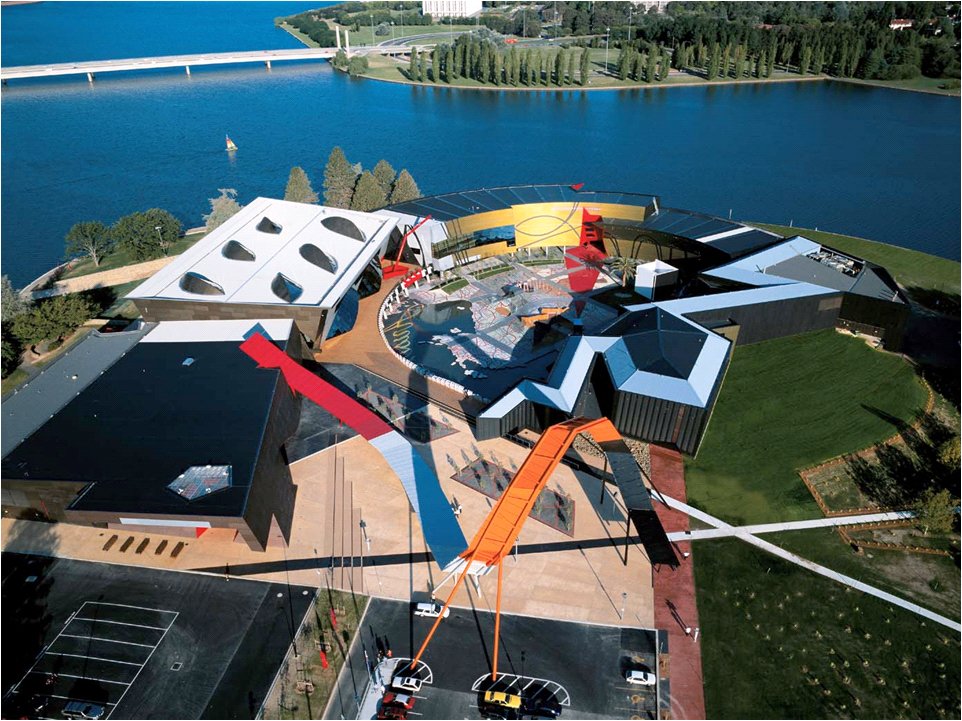
Aerial view of ARM's building.
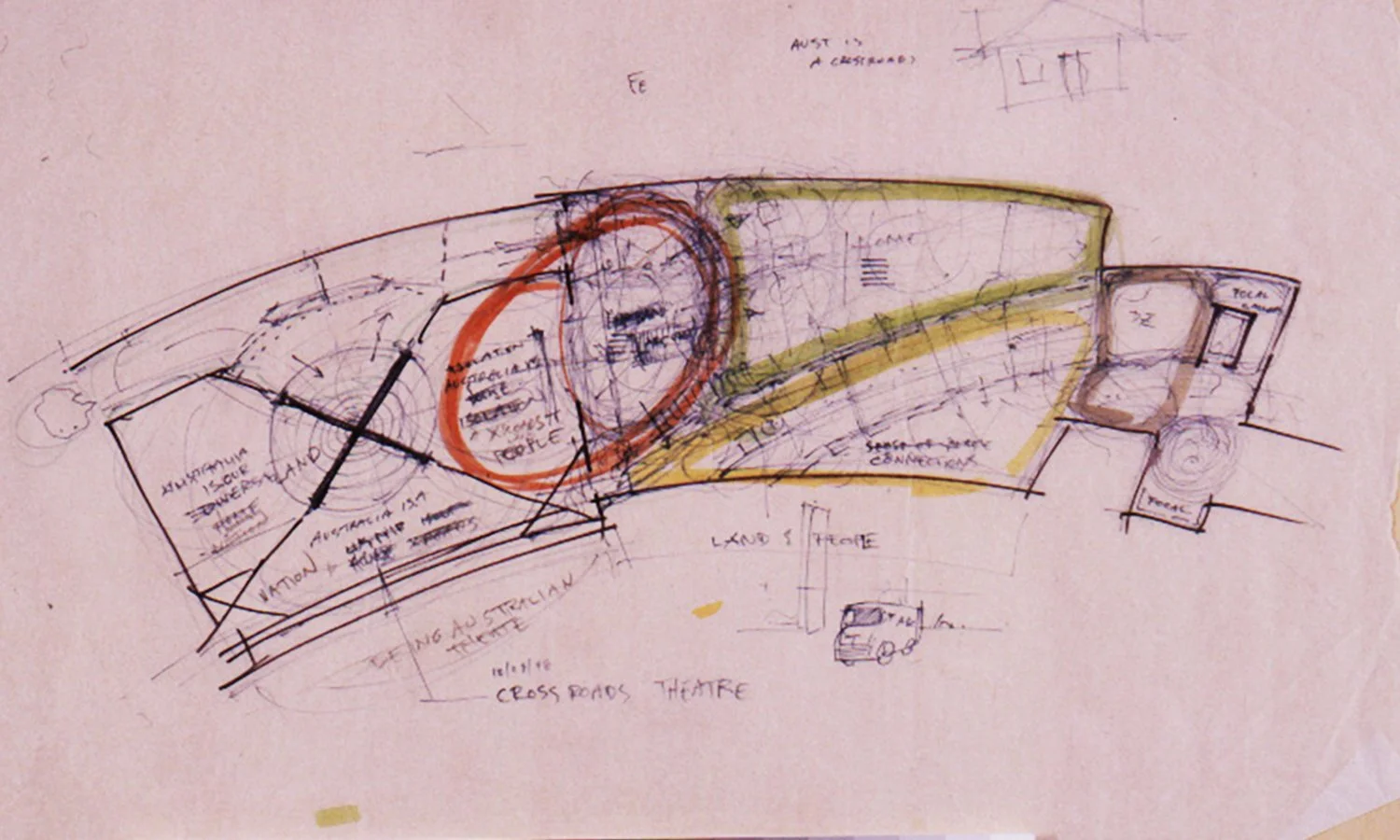
Guerin's diagram of Circa, a rotating theater, and the ground floor spaces.
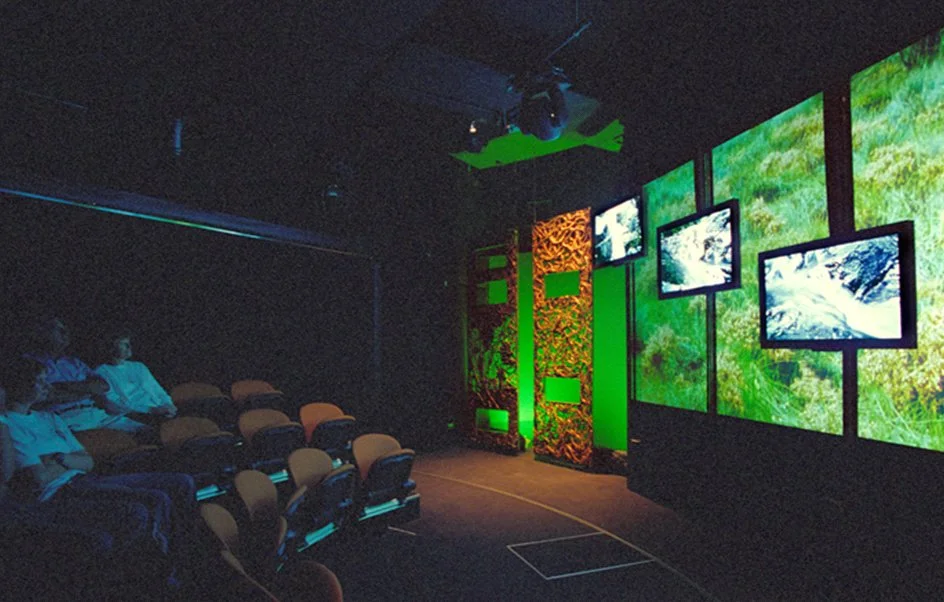
Circa's Land chapter incorporated movable screens. Nation and People were the other chapters.
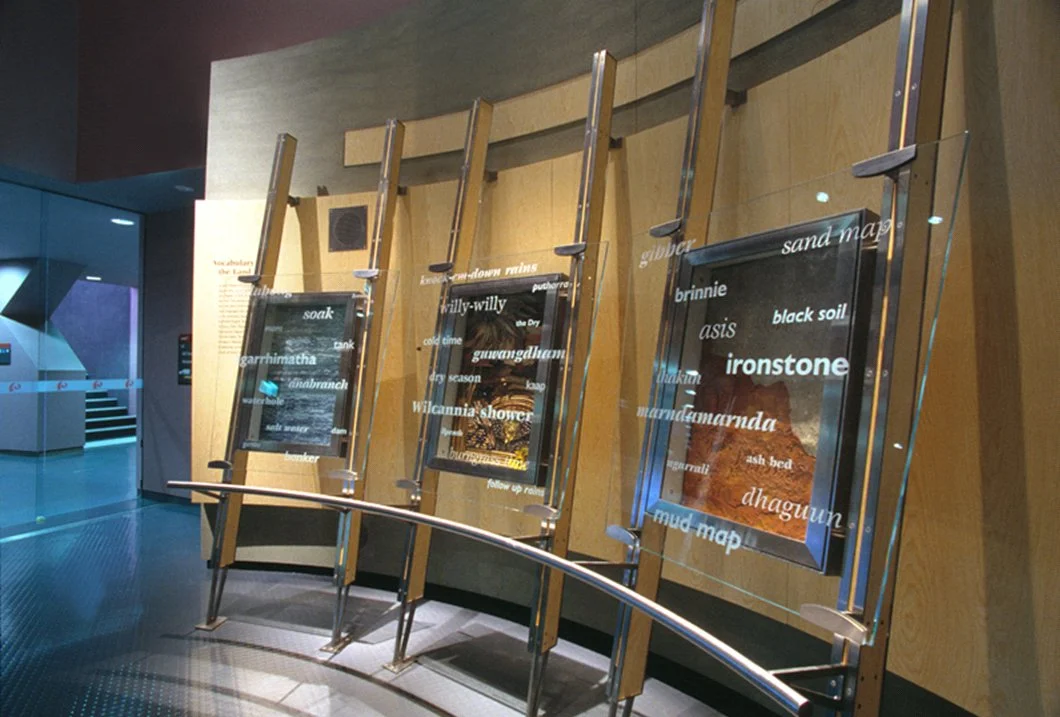
Leaving Circa, visitors encounters Tangled Destinies, an exploration of linguistic cartography.
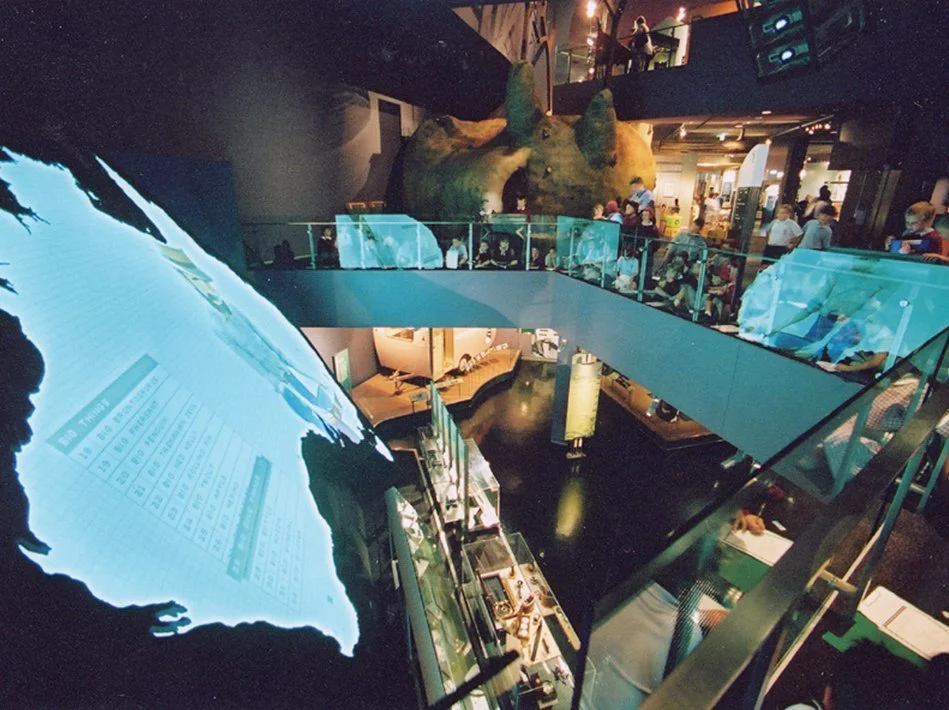
Visible from three stories, the map of Australia allowed visitors to cue up short stories that created an ever-changing experience.
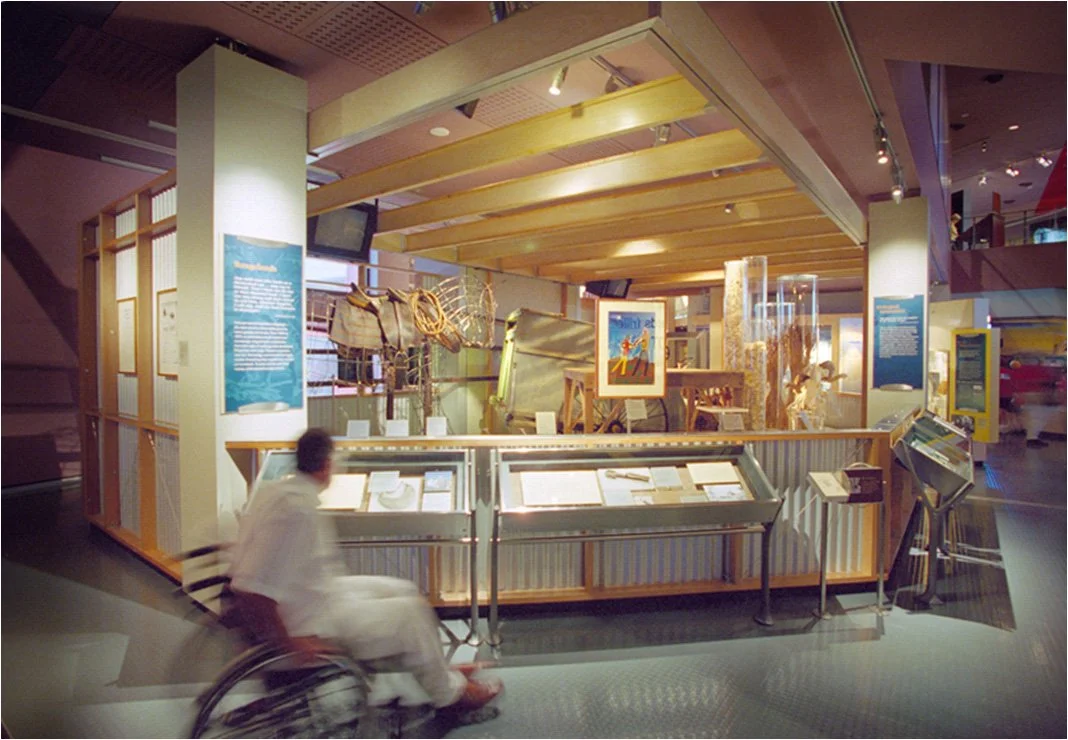
The sheep station, an iconic outback structure.
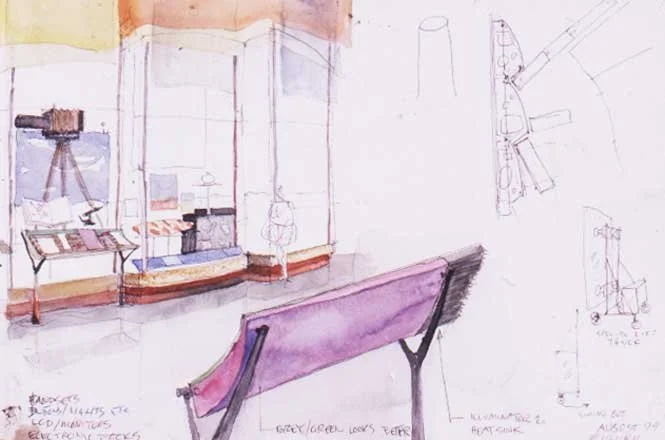
Guerin's study of the the reader rail system inspired by aboriginal structures. The uprights were molded then cast in aluminum.
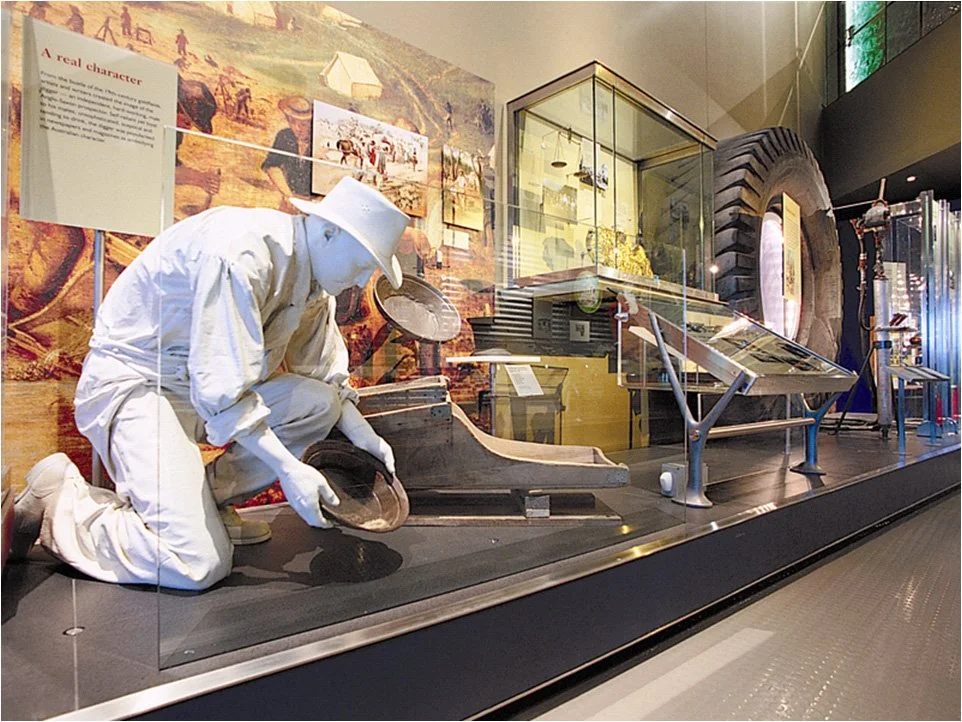
Thousands of artifacts, props, and recreations were created by the team.
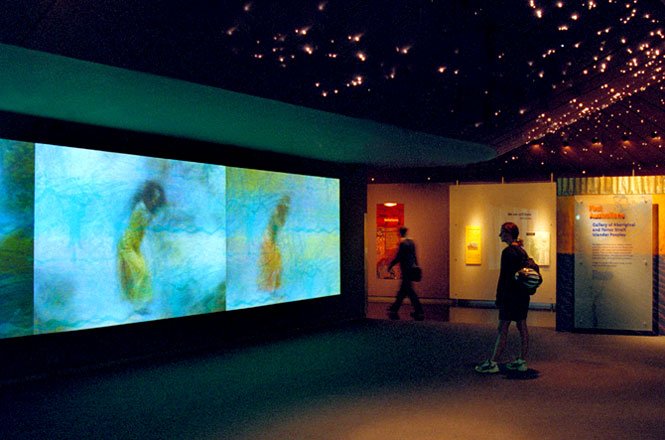
The Gallery of Aboriginal Australia included a indigenous dance video triggered by visitor's footsteps on piezo electric wires.
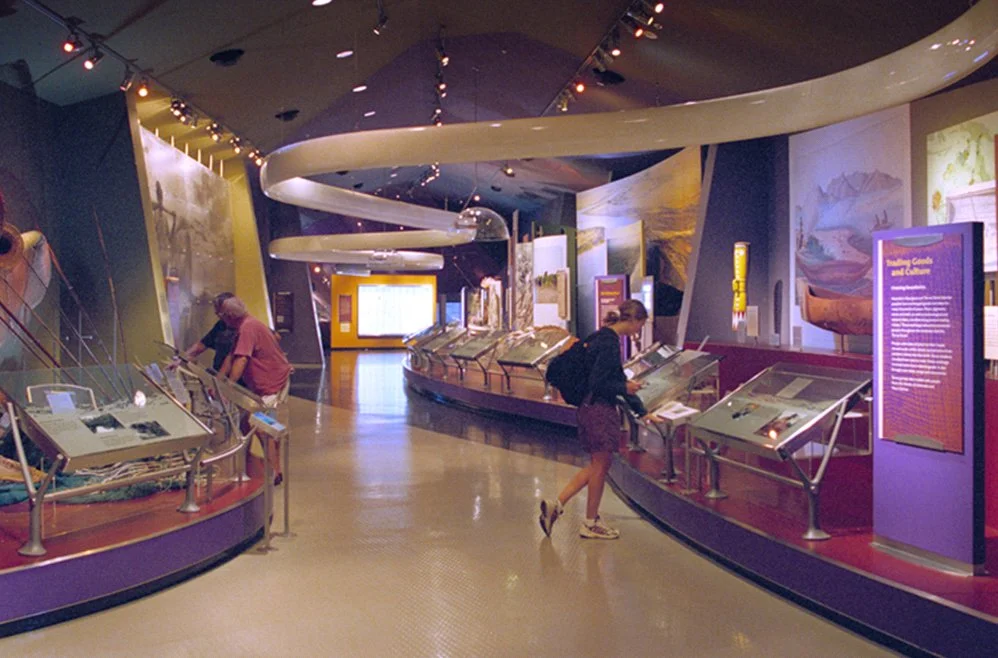
Aboriginal cultures were interpreted under a winding overhead snake built by a Ozzie surfboard maker.
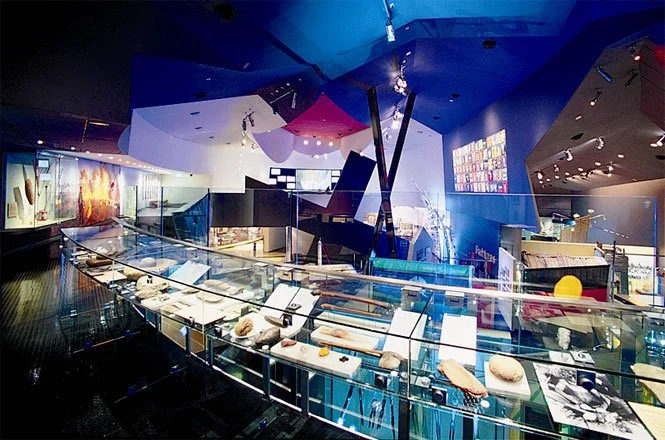
The GAA overlook included glass cases whose artifacts cast shadows and reflections.
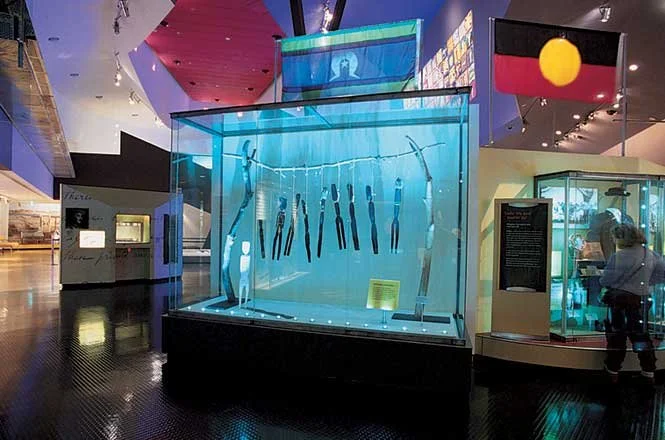
Artist Fiona Foley's stunning "Annihilation of the Blacks" was a central feature of the lower level of the GAA.
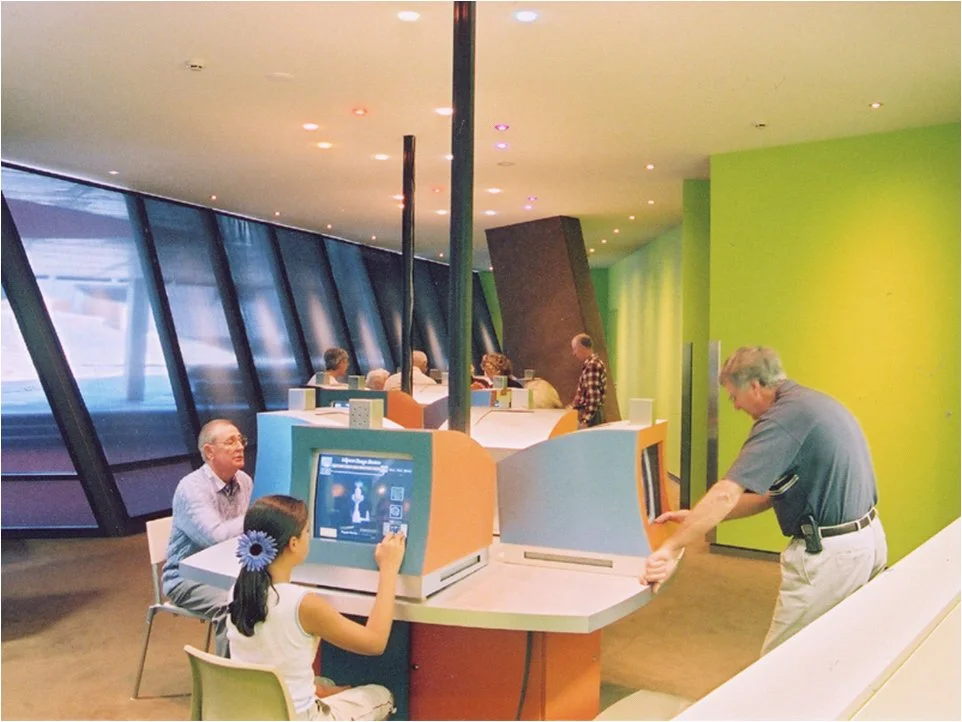
In a finale, K-Space allowed 16 visitors to simultaneously design a vehicle or a building. UX and development by Drew Whitehouse.
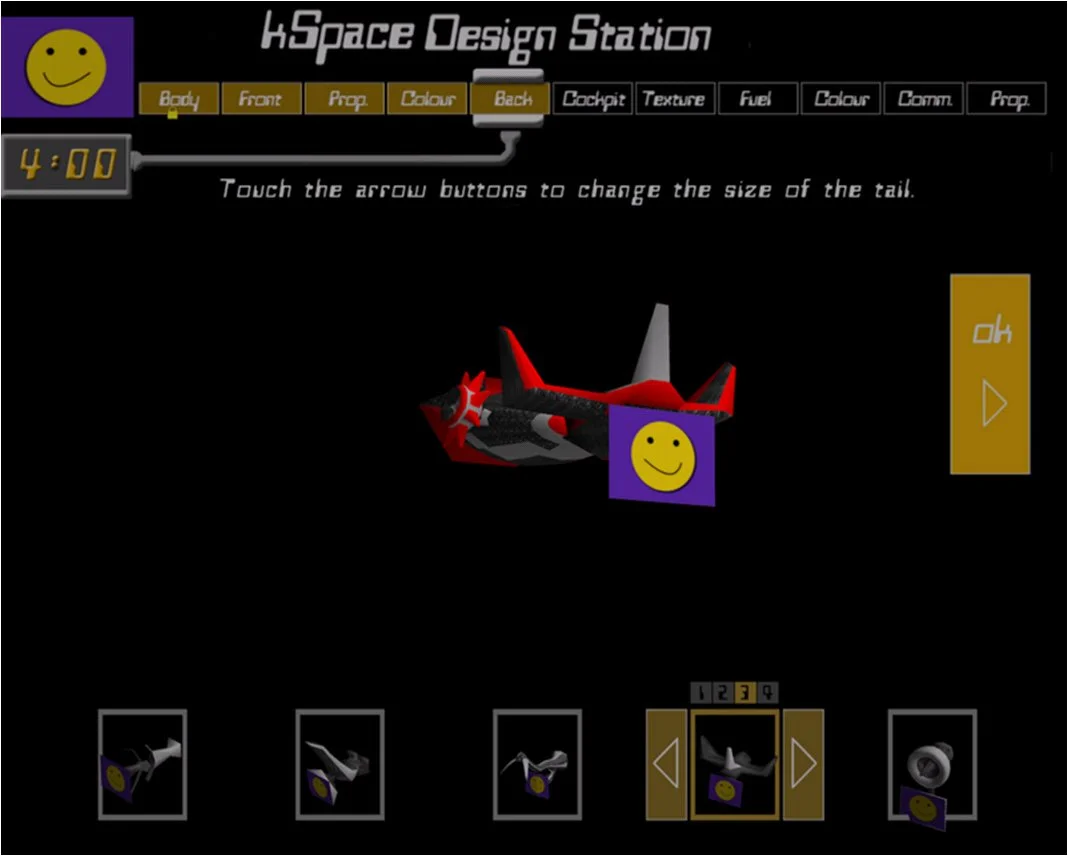
They could place their image on the object, which was built from a library of options.
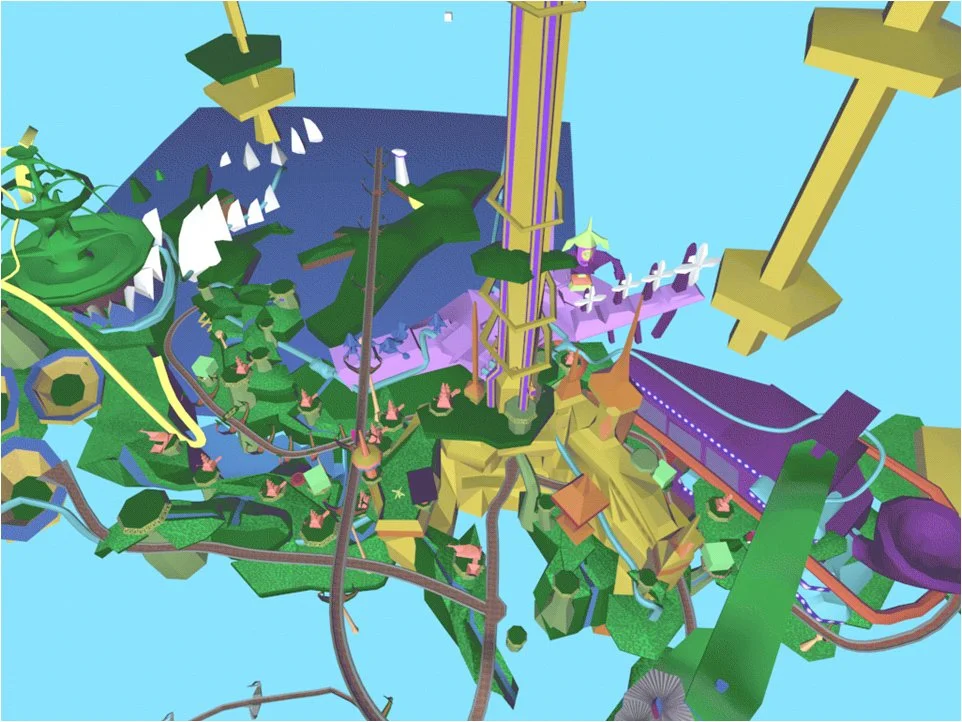
Users collectively fly through the resulting city through a polarized goggle 3D experience. Incredible for it's time.